
A coordination model that turns good intentions
into functioning crisis housing -- one house at a time.
Shelters are full. Waitlists are long. The organizations trying to help are overwhelmed, underfunded, and disconnected from each other.
Local churches spend tens of thousands annually on hotel stays for families in crisis because there is nowhere else to send them.
It is a lack of coordination, structure, and a plan for how to turn good intentions into functioning programs.
We help people and organizations stand up self-sustaining crisis housing operations by connecting them with partners, a plan, and tools.
Partners who have one piece of the puzzle with those who have the rest
Agreements, financial models, staffing guidance, and operational playbooks
We do not run houses, manage intake, or deliver care. Partners do.
The network grows house by house. Each new operation is a single house with a clear mission.
Every house selects one housing type and one population to serve. No trying to be everything to everyone.
Houses are designed to cover their own costs once operational. Donations seed new houses, not prop up old ones.
Crisis housing is temporary, structured shelter. Each stage serves a different point in recovery. An operator selects one stage and one population to serve.
Immediate safety and basic needs. Dormitory-style housing with maximum beds. Case manager visits for intake assessment and connection to next-stage options.
Clinical stabilization -- addressing addiction, untreated mental health conditions, medical needs. Assigned case manager with weekly check-ins and regular access to clinical services.
Building life skills and financial footing. Private studio or affordable unit. Monthly check-ins focused on employment, budgeting, and community connection.
Practicing full autonomy with a safety net. Support shifts from direct oversight to on-call availability. Participant may begin mentoring others.
Someone to fund it, someone to run it, a place to put it, and specialists to handle what the operator cannot. Most people who want to help only have one or two of these. Our job is to find the rest.
The fuel
The engine
The foundation
The safety net
Secure donations or redirect existing funds. Choose the housing stage and population. Refer applicants as a trusted community touchpoint.
Assess applicants, develop care plans, track progress. Manage finances and staffing to keep the house running and self-sustaining.
Own and maintain the property. Offer lease terms that make crisis housing viable for a nonprofit operator.
Licensed specialists for health, education, workforce development, peer support. They handle what the operator cannot.
per month on hotel stays
Temporary. No structure.
No path forward.
recovery beds sponsored
Structured. Staffed.
A real path to stability.
The same dollars your church already spends can fund structured, staffed recovery housing through a trained operator -- with measurable outcomes.
A church, nonprofit, or community member comes to One House with a desire to help.
Choose one housing stage and one population. Decide whether to sponsor, operate, or both.
We match whatever is missing. Sponsors find operators. Operators find facilities.
We deliver the playbook: agreements, financial model, staffing guidance, startup grant.
The operator runs the house. Service providers plug in. The sponsor sees their impact.
Connecting sponsors, operators, facilities, and service providers
Agreements, policies, financial models, staffing guidance
Help partners pick a lane and choose a role that fits
Intake, tracking, transitions, and outcome reporting across the network
Seed funding to expand or prevent collapse during critical periods
Every house joins a distributed network that grows one house at a time
Houses are designed to cover their own costs once operational. This changes the math for donors.
A contribution to One House does not maintain an existing program. It seeds a new one. Each house that reaches self-sustainability creates permanent capacity in the network.
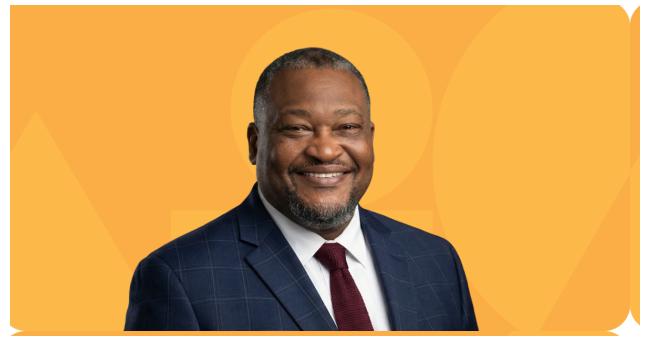
9-year NFL veteran. Background in low-income housing development.
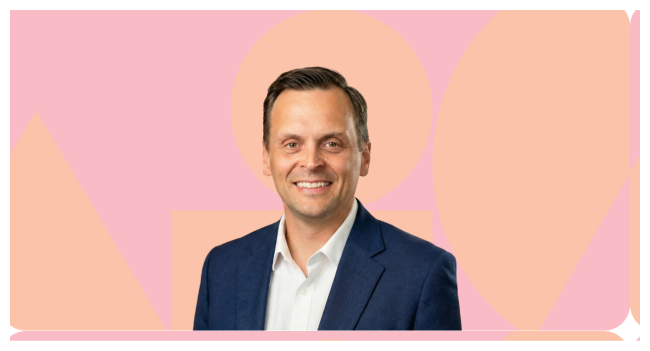
Real estate investor, software executive, private equity background.
Two doctorates with a specialty in mental health.
Owns and operates approximately 75 units of affordable housing.
You do not need all the answers. You just need the willingness to start. We will help you find the rest.